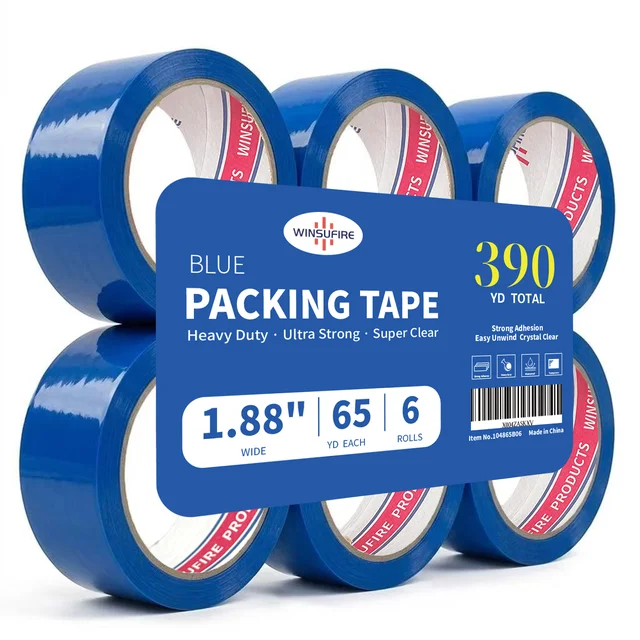
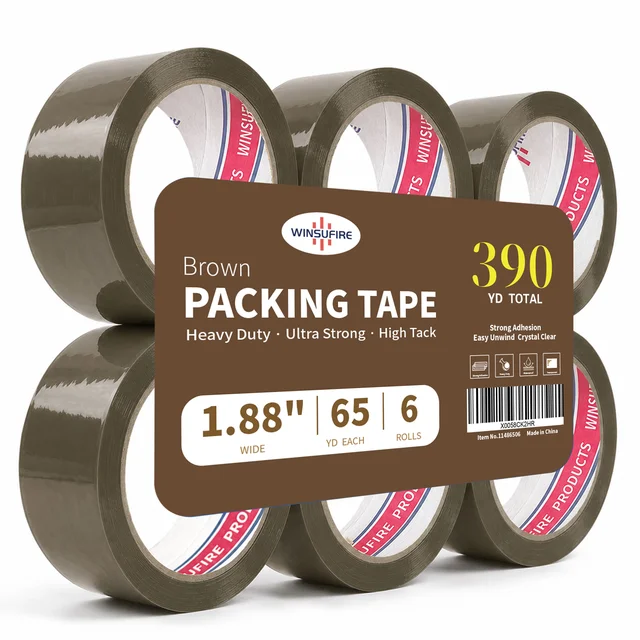
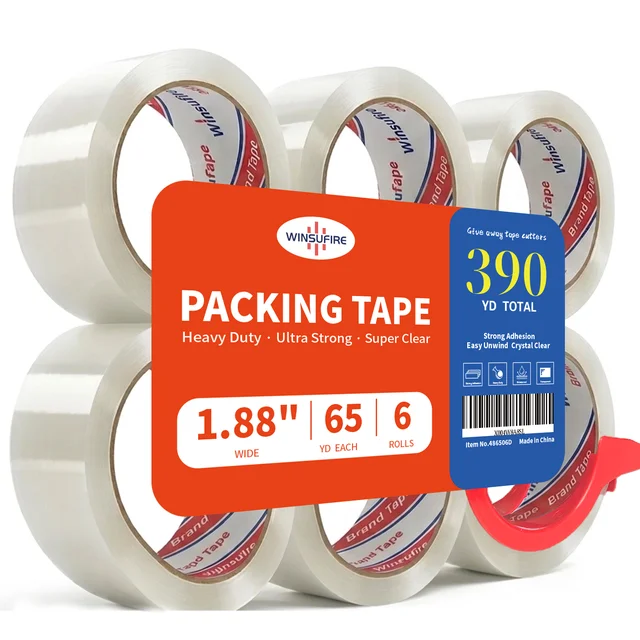
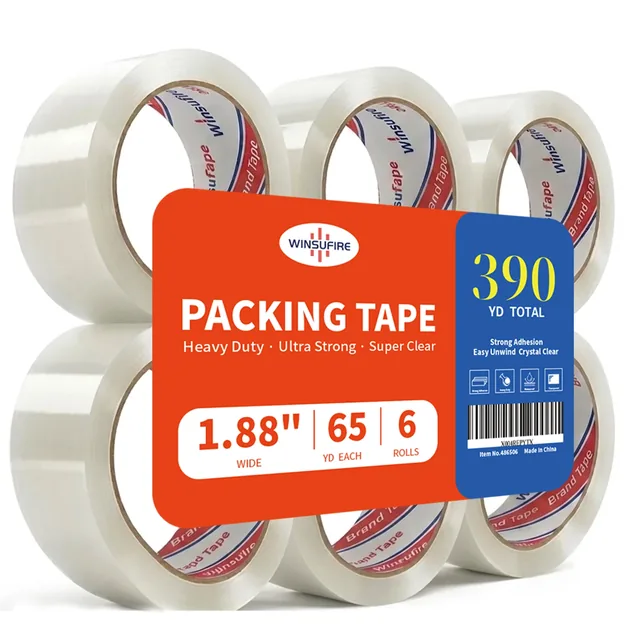
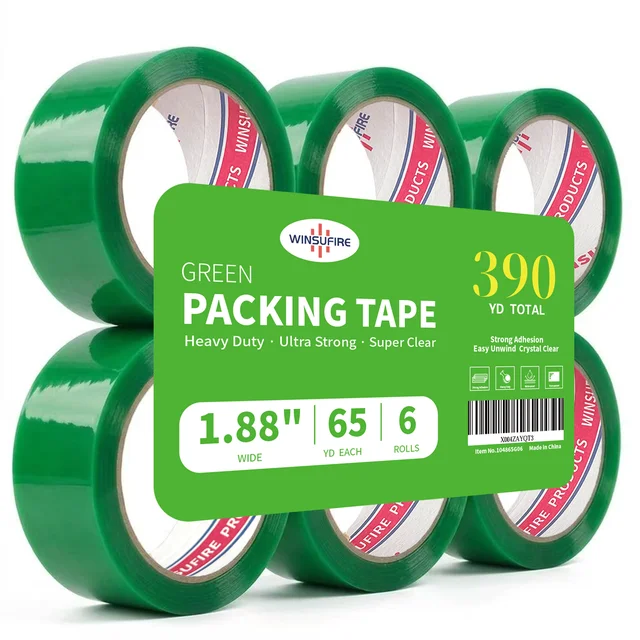
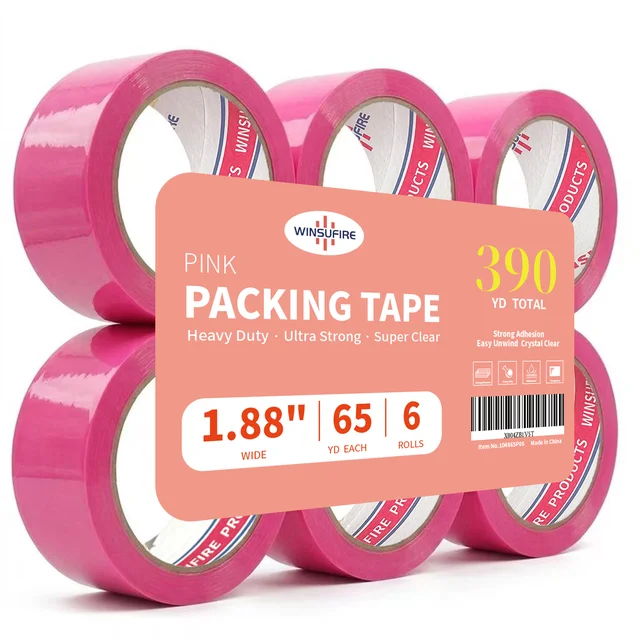
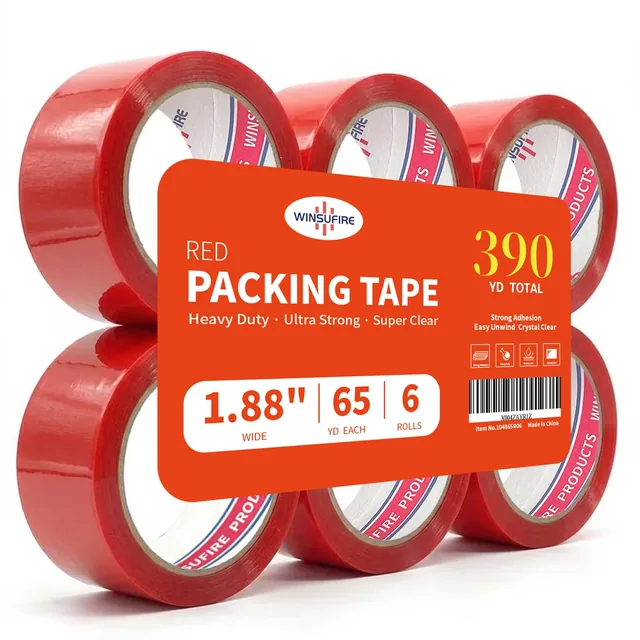
Shop clear and colored packing tape for cardboard boxes, shipping, moving and storage. Compare packaging tape widths, roll lengths and pack quantities before choosing.
Compare width and usable length as well as rolls per pack.
Use a clean, dry, sound carton; tape cannot repair an overloaded box.
Check your carrier: 1.88 inches is narrower than a 2-inch minimum.
Packing tape, packaging tape or shipping tape?
These terms often describe tape used to seal cardboard boxes. The name alone does not establish a shipping approval or performance rating: compare the individual product specifications and your carrier’s requirements.
Clear or colored packing tape
Clear tape lets you see the carton beneath the sealed area. Colored packing tape can help identify rooms, storage groups or dispatch batches. Choose the appearance you need, then compare width, roll length and pack quantity; color does not define adhesive strength.
Choose width and length separately
Width determines the strip’s coverage across a seam. Roll length and the number of rolls determine the tape available in a pack. Do not round a listed 1.88-inch width up to 2 inches when checking a minimum-width requirement.
Plan for shipping, moving and storage
Start with a sound carton of the right size. Shipping requires the carrier’s current packaging instructions; moving involves lifting and handling; storage also requires a suitable location and regular checks. Tape cannot compensate for a damaged or overloaded carton.
Plan, apply and check
Pack and cushion the contents so the flaps close flat without force. Replace damp, torn or structurally damaged cartons.
Remove loose dust from the carton’s sealing area and keep the contact surface dry. Check an inconspicuous area first if the surface is coated or unusual.
Measure and cut strips for the carton seams you need to close. Follow your carrier’s instructions for strip width, overlap and any additional seam coverage.
Apply without excessive stretching and press along the full strip, including the edges and ends. Check that the flaps remain closed and the tape is in continuous contact.
Before dispatch or moving, inspect the top and bottom closures and keep shipping labels readable. If a seam lifts, check the carton and contact surface before adding more tape.
Buying questions
Are packing tape and packaging tape different?
The names are often used for the same carton-sealing category. Check the exact product’s width, length, pack quantity and intended application rather than deciding from the name alone.
Which tape should I choose for shipping boxes?
Choose a product whose stated specifications and closure method match your carrier’s current packaging requirements and the carton you are using. A product described as shipping tape is not automatically approved for every shipment.
Clear or colored tape?
Choose the visibility and identification you need, then compare the individual product specifications. Color alone does not define strength.
How much packing tape will I need for moving?
Measure the tape used to close one representative packed carton, including the bottom and any additional seams. Multiply by the number of similar cartons and allow for different box sizes and handling needs. There is no fixed boxes-per-roll count.
Is 1.88-inch tape the same as 2-inch tape?
No. Keep the listed width when comparing products. If a carrier specifies a minimum width of 2 inches, a 1.88-inch product does not meet that dimension.
Can I use masking tape instead of packing tape?
Do not assume the products are interchangeable. Select tape intended for carton sealing and check the required shipping specifications; masking tape is generally chosen for masking applications.
Will more layers make any box safe?
No. Carton condition, contents, cushioning and the carrier’s packing requirements all matter.