
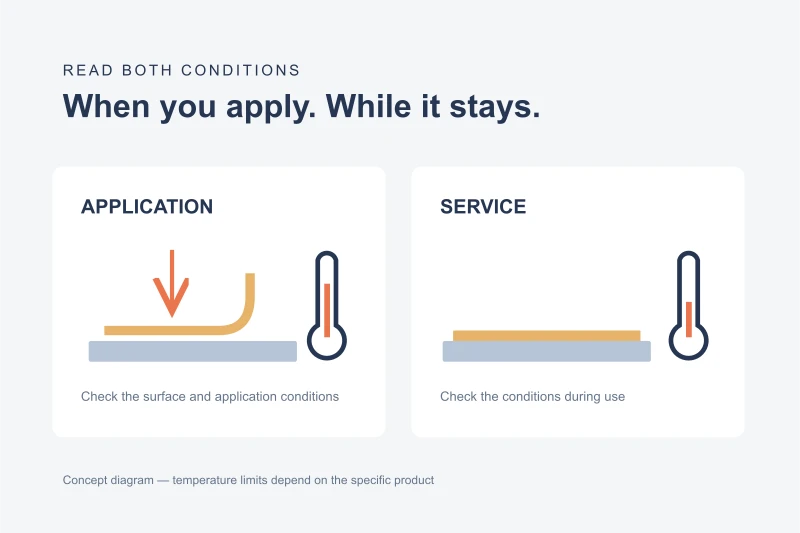
Two temperature ranges can describe two different stages of a tape’s life. Application temperature concerns making the bond. Service temperature concerns the correctly applied bond in use. Do not substitute one for the other.
Cold can make pressure-sensitive adhesive less able to conform to surface details. Frost or condensation adds another obstacle. Warming the roll while leaving the carton or component cold may solve only half the problem.
Condition both tape and substrate within the specified application environment. Confirm that surfaces are dry and free of condensation. Required conditioning time depends on the object and conditions; a universal ten-minute rule would be fiction. If installation must happen in the cold, select a product explicitly intended for it.
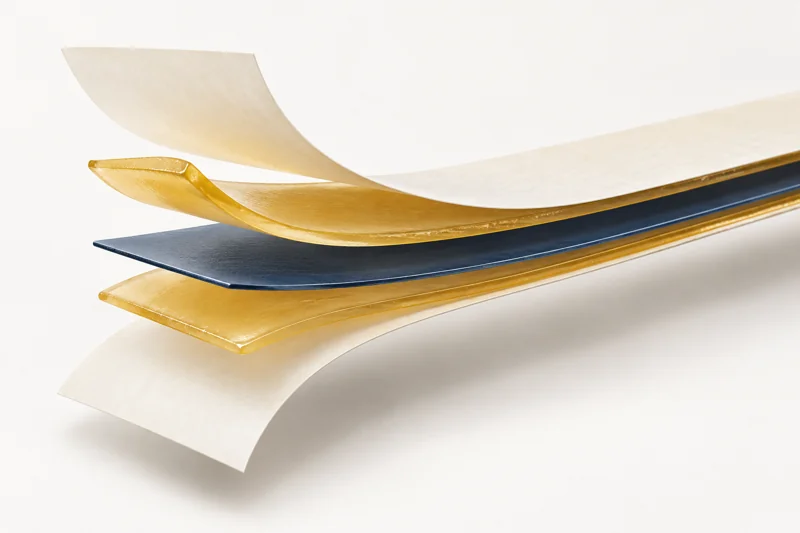
Heat needs interpretation too. Short-duration exposure and continuous service limits can differ. Ask what duration, load, and substrate accompany a temperature number.
Do not improvise with flames or concentrated hot air to force instant grip. The backing, finish, or plastic component may suffer first. The useful tools are the correct product data and a clear view of the surface condition.
Further reading (technical background, not certification of WINSUFIRE products): 9740 产品页所列的施工与使用温度区别:https://www.3m.com/3M/en_US/p/d/b40070427/ 胶带施工资料:https://multimedia.3m.com/mws/media/2366012O/3m-adhesive-transfer-tape-l3-t3.pdf?pif=000391
Conversation (0)
Be the first to add a useful tip or ask a question.