
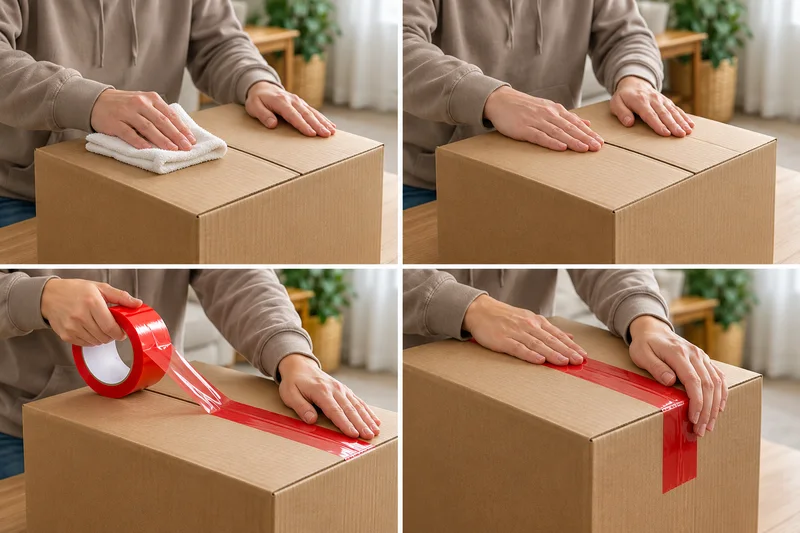
A neat tape line is not the final inspection. The package also needs a readable shipping label, and that label deserves a planned space rather than whatever corner remains after sealing.
Mark out the label area first Before closing the first box in a batch, check that the intended label fits the available flat panel. FedEx’s label guidance says to avoid placing a label, barcode or pouch over the middle seam or edge of a box. Use the current instructions for your actual carrier and shipment rather than treating this article as a universal label specification.
Separate the two jobs The closure method should secure the carton as required by your packing plan. The shipping label should provide the shipment information in the carrier’s required format. Do not use a label to conceal a closure that needs correction, or assume that a label will hold the flaps shut.

Check the print before applying it Confirm that the address, shipment details and barcode are complete and that the print has no obvious missing sections. Use the correct label for the package in front of you. At a busy bench, a readable label on the wrong carton is still the wrong label.
Inspect the finished surface Look for folds, lifted corners and a barcode running into a seam. Follow the carrier’s instructions about label protection and any document pouch; do not automatically cover every label with several layers of tape. A visual check or an internal scan does not guarantee acceptance by a carrier’s system.
Make it a two-part handoff Have the final check ask two separate questions: is this package closed appropriately, and does the label belong to it and sit correctly? Those questions are short enough to use even when the dispatch table is full.
Reference: FedEx label placement guidance, https://www.fedex.com/en-us/shipping/create-shipping-label.html . Carrier instructions can change; check the current guidance for your service.
Conversation (0)
Be the first to add a useful tip or ask a question.