
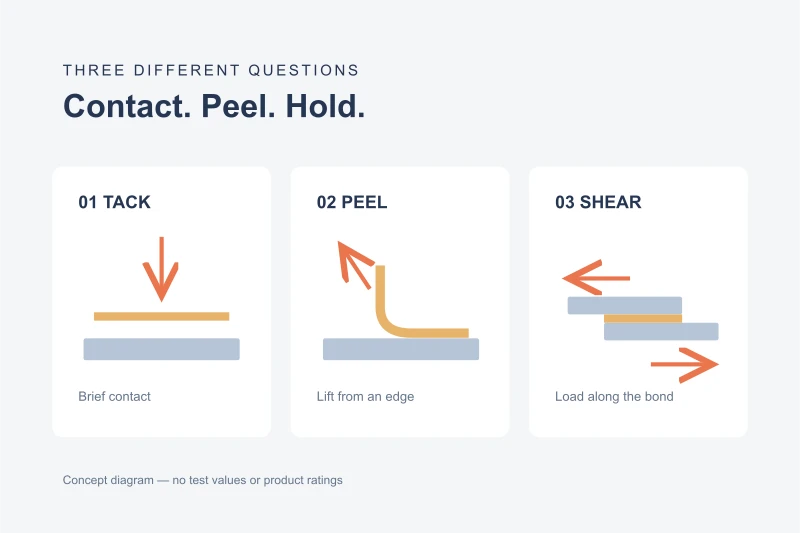
A message saying “it does not stick,” accompanied by one blurred close-up, leaves everyone guessing. Better photographs do not diagnose the chemistry, but they can make the next conversation much more precise.
Photo one: product identity Photograph the original label and any supplied batch marking. Keep the model and size readable. Do not assume the color of a loose roll identifies its formulation. Share only the product information needed for the discussion.
Photo two: the complete job Show the whole carton or application area before adding more tape. Include the closure pattern and the place where the problem appears. A close-up alone can hide an overfilled box, a corner or a change in surface shape.
Photo three: the affected section Take a clear image of the lifting edge, wrinkle or separation area. Use ordinary light and a visible scale where useful, keeping it clear of the adhesive. Avoid filters or image enhancement that changes the appearance of the fault.
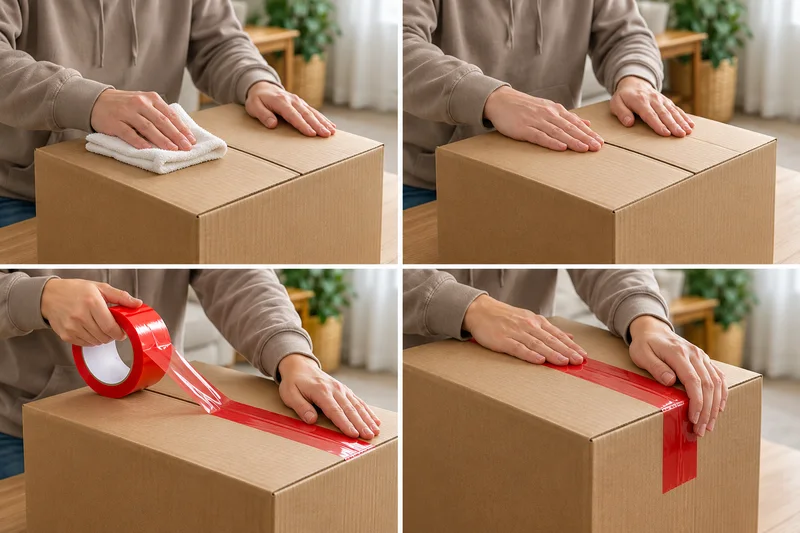
Photo four: both sides of the separation If safe handling and the investigation allow it, show the detached strip and the corresponding surface. Photograph visible fibers, dust or residue without deciding in advance what caused them. Do not destroy a sample that may need to be examined.
Photo five: the setup Show the dispenser model, threading arrangement or relevant working area without putting hands near a blade or moving equipment. Record the application time and observed conditions separately; a photograph cannot establish a temperature or elapsed time that was never measured.
Send a short account with the images List what was applied, where, when the issue appeared and what changed afterward. Conceal customer addresses, shipping barcodes and unrelated order details before sharing externally. Keep an original copy of the evidence internally.
The aim is not to win an argument with a dramatic picture. It is to give the supplier or your team enough context to propose a sensible next check.
Conversation (0)
Be the first to add a useful tip or ask a question.