
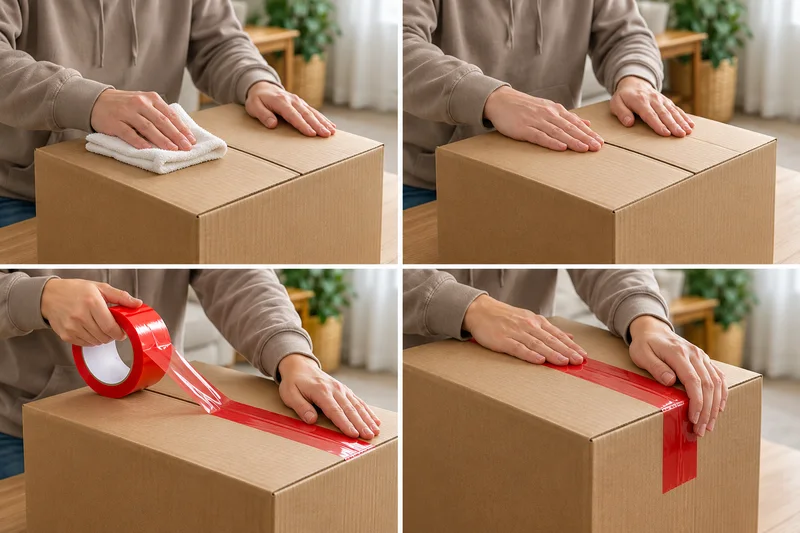
A packing bench has its own small mysteries. A box leaves looking tidy; later, a tape end stands up like a little flag. Before adding another layer, keep one failed sample. It can tell you more than a fresh roll on a different box.
Start with the loose section Look at the adhesive side and the carton where it detached. Photograph dust, paper fibers, wrinkles and any visible gap. These observations are clues, not a laboratory identification of the failure. A paper layer coming away needs a different conversation from an apparently clean separation. Do not turn one observation into a verdict that every recycled carton is unsuitable.
Check the box before blaming the roll Do the flaps meet without being forced down? Is the box overfilled, damaged or being reused? If the contents keep pushing the flaps apart, record that condition and review the carton and packing method. More tape does not by itself qualify an unsuitable package for shipping.
Press along the whole strip Pressure-sensitive packaging tape needs application pressure to make contact with the carton. Follow the specific product and equipment instructions. On a manual bench, check whether the operator presses the ends as well as the center. On a sealer, inspect the wipe-down components under the equipment’s safe maintenance procedure. Do not reach into a running machine.
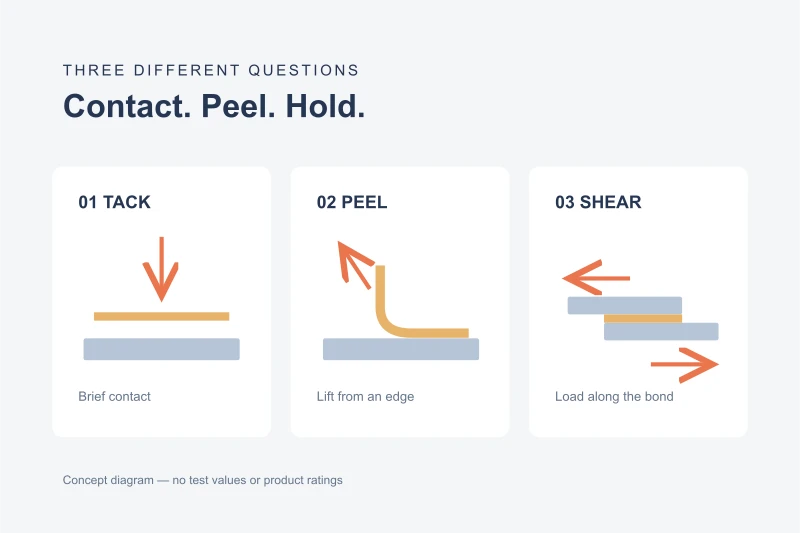
Record the conditions Note whether the carton was dusty, damp or brought directly from another storage area. Compare the actual conditions with the tape’s documented application requirements. Do not borrow another product’s temperature limits or invent a warming time.
Change one thing at a time Use comparable cartons and packing loads. First correct the box condition, then compare application technique, then evaluate a different suitable tape if needed. Give every sample an ID and record when it was checked. This is a troubleshooting exercise, not a transport certification.
My bench rule: photograph the first failure before covering it up. The next strip should solve a known problem, not hide the evidence.
Technical background: Shurtape, “What is wipe-down force and why does it matter in case sealing?” https://www.shurtape.com/tape-university/packaging/wipe-down-force-matters/ . This explains application pressure; it is not a performance report for WINSUFIRE.
Conversation (0)
Be the first to add a useful tip or ask a question.