
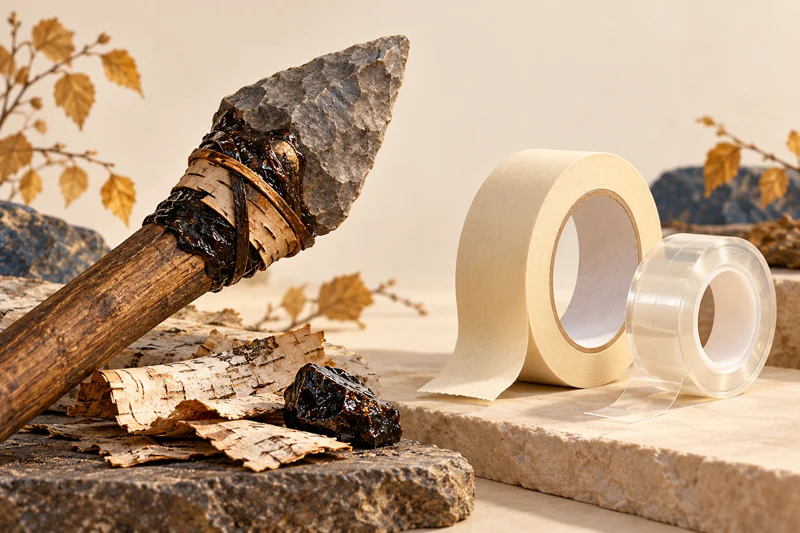
Start the history of adhesives with transparent office tape and you miss most of the story. Archaeological research documents birch-bark tar used to attach stone tools. Experimental reconstructions show several possible production routes; identifying the exact method used for an individual ancient find is another question.
Fast-forward to two-tone car painting. A masking material had to protect finished paint, stay in position, and come away at the right moment. 3M dates Richard Drew’s masking tape invention to 1925 and the introduction of transparent cellophane tape to 1930. Scotch is that company’s brand, not a generic name for every transparent tape.
The interesting lesson is the brief: a masking tape that tears off the finish has failed, however impressive its grip. Stronger is not automatically better.
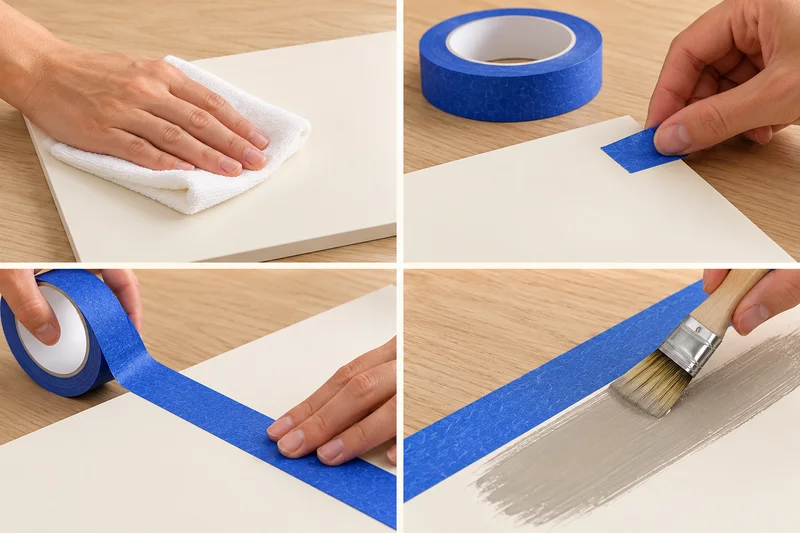
A modern tape is also more than adhesive. Its backing influences handling and flexibility; its adhesive meets the surface; a release liner may protect an exposed adhesive layer. Those parts work together.
When buying masking tape, ask when you will remove it before asking how firmly it sticks. That question gets surprisingly close to the original problem tape was designed to solve.
Further reading (technical background, not certification of WINSUFIRE products): 史前桦树皮焦油制取研究:https://www.nature.com/articles/s41598-017-08106-7 https://www.3m.com/3M/en_US/about-3m/history/
Conversation (0)
Be the first to add a useful tip or ask a question.