
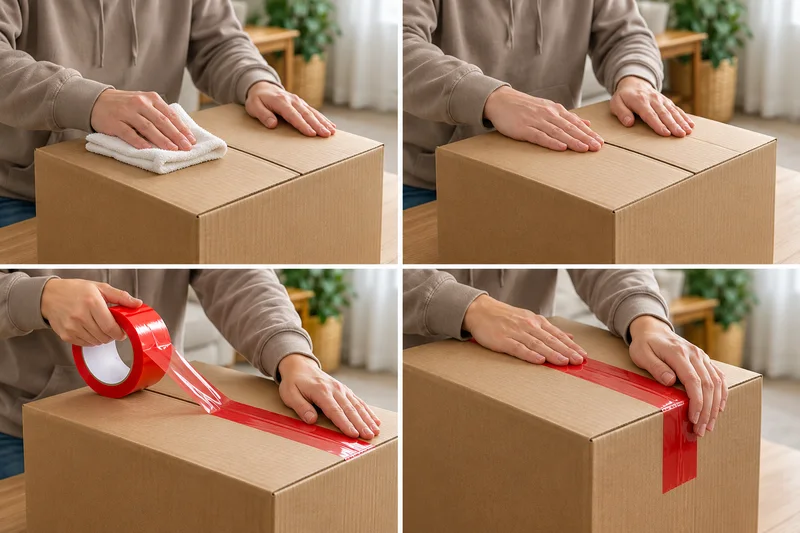
“This roll is cheaper” is the beginning of a calculation, not the answer. At a packing bench, the useful comparison is the cost of a suitable seal per carton. Width, product suitability and the required closure method still have to match.
Measure the job you actually do Measure a strip as it would be applied, including the portions that extend beyond the seam. Count every strip used on both the top and bottom. If your approved packing method uses additional edge strips, include them. Do not estimate a complex closure from the center seam alone.
A deliberately simple example Suppose a chosen packing method uses two strips, each 50 centimeters long. That is 1 meter per carton. This is an arithmetic example, not a recommended sealing pattern for every package.
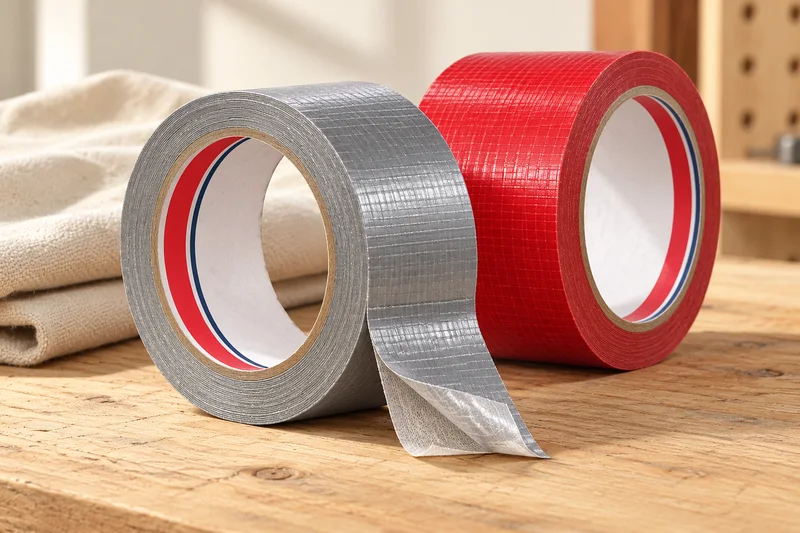
A nominal 65-yard roll contains 59.436 meters, using 1 yard = 0.9144 meter. At exactly 1 meter per carton and with no loss, 59 complete cartons fit within that length; the remaining fraction does not make a sixtieth carton. If you budget an illustrative 10 percent of the roll for waste, the calculation becomes 59.436 × 0.90 ÷ 1 = 53.4924, or 53 complete cartons. Ten percent is a planning assumption here, not measured WINSUFIRE waste.
Compare the same units A six-roll pack of 65-yard rolls has 390 yards of nominal tape length. Divide the pack price by the total length to compare price per yard. For cost per carton, divide the pack price by the number of complete cartons your measured method can seal. Keep rounding and leftover lengths visible; separate roll ends may not be usable as one continuous strip.
Measure rework too For a trial batch, record cartons packed, rolls opened, leftover rolls, discarded strips and cartons that needed resealing. A low purchase price can lose its advantage if handling and rework differ. Check the cause before deciding whether the tape, equipment or packing method needs changing.
The useful number is not “how large the roll looks.” It is the length your process uses to make a suitable package.
Conversation (0)
Be the first to add a useful tip or ask a question.