
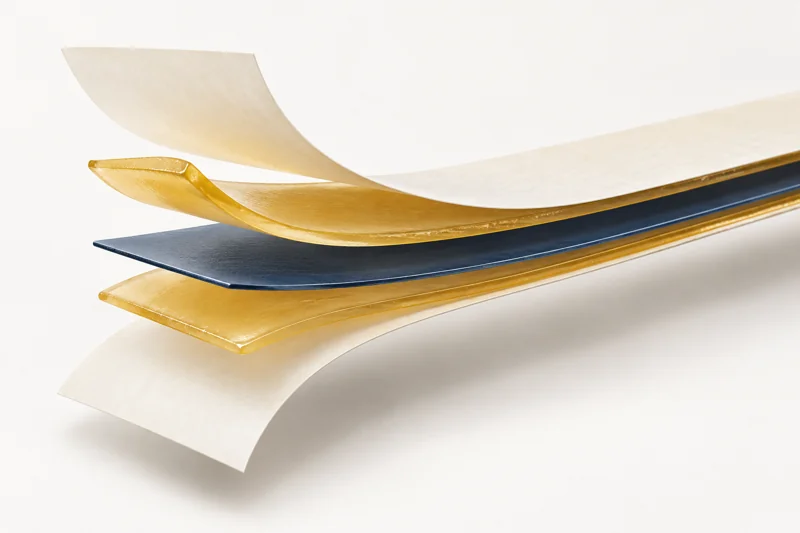
Rubber-based pressure-sensitive adhesives often suit applications needing quick grab. Natural rubber is typically formulated with tackifying resins and other ingredients; synthetic rubber systems have their own formulation choices. Neither label identifies one fixed performance grade.
Acrylic systems are often selected for aging and environmental performance. Initial tack varies with formulation and modification. Some bonds develop further after application; a quick fingertip check does not describe the whole service life.
Silicone pressure-sensitive adhesives can suit particular substrates and temperature conditions. Silicone adhesive, silicone-rubber backing, and a silicone-coated release liner are different things. A mention of silicone somewhere in the construction is not a temperature rating.
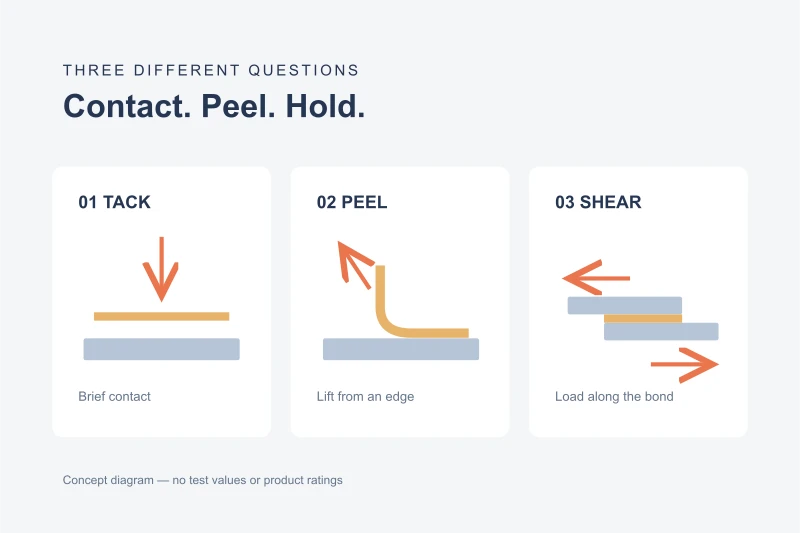
Before comparing peel numbers, align the substrate, peel angle, speed, dwell, temperature, and units. A result on steel cannot simply be ranked against one on plastic.
For temporary positioning, investigate initial grab and clean removal. For longer-term mounting, investigate holding performance, compatibility, and aging. For unusual surfaces, ask for a suitable grade. Color, price, and finger tack cannot reliably identify the formulation.
Further reading (technical background, not certification of WINSUFIRE products): 三类胶黏体系:https://www.tesa.com/en-us/about-tesa/press-insights/stories/3-types-of-adhesives-explained.html 丙烯酸、橡胶与硅酮胶系:https://www.tapesolutions.saint-gobain.com/en-us/resources/blog/acrylic-rubber-or-silicone-adhesive
Conversation (0)
Be the first to add a useful tip or ask a question.